

Water Hardness
Understanding the causes of mineral-rich water and effective methods to treat it for domestic and industrial use.
What is water hardness?
Water hardness refers to the concentration of dissolved minerals — primarily calcium (Ca²⁺) and magnesium (Mg²⁺) ions — acquired as water flows through rock and soil. It is measured in mg/L as CaCO₃ or in grains per gallon (GPG).
Ca²⁺ Calcium Mg²⁺ Magnesium HCO₃⁻ Bicarbonate SO₄²⁻ Sulfate
Primary causes
Geological contact
As rainwater — naturally slightly acidic — percolates through limestone and dolomite, it dissolves calcium and magnesium carbonate minerals into solution.
Two types
Temporary hardness — caused by dissolved bicarbonates; removed by boiling.
Permanent hardness — caused by sulfates/chlorides; requires chemical or physical treatment.
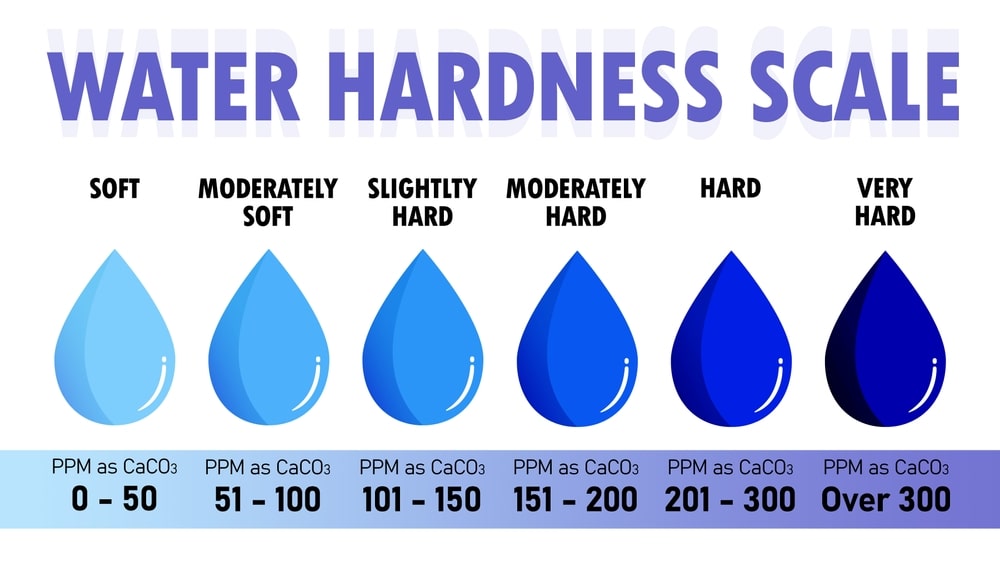
Problems caused by hard water
- Scale buildup in pipes and boilers
- Reduce the efficiency of water heaters
- Soap scum and lather reduction
- Staining of laundry and fixtures
- Shortened appliance lifespan
Potential benefits of hard water
- Contributes dietary calcium and magnesium
- Associated with reduced cardiovascular risk
- Less corrosive to metal pipework
- Preferred taste by many consumers
- Natural mineral content for cooking
Treatment methods
Ion exchange softening
Resin beads swap Ca²⁺ and Mg²⁺ ions for sodium ions. Most common domestic method; requires periodic regeneration with salt.
Reverse osmosis
Water is forced through a semipermeable membrane that removes up to 98% of dissolved minerals, producing highly purified water.
Boiling (temporary)
Drives off CO₂ and precipitates calcium carbonate as scale. Only addresses temporary hardness due to bicarbonates.
Chemical precipitation
Adding lime (Ca(OH)₂) or soda ash (Na₂CO₃) precipitates minerals as insoluble carbonate solids, which are then filtered out.
Distillation
Water is boiled, evaporated and recondensed, leaving all dissolved minerals behind. Effective but energy-intensive.
Magnetic treatment
Magnetic fields may alter how minerals crystallize, reducing scale adhesion. Effectiveness is debated; used as a low-maintenance option.
Water hardness is a global issue — over 60% of the world’s population uses moderately hard to very hard water. Treatment choice depends on intended use, scale of application, and local mineral composition.